
How to Use Ceremony Microphones Without Stress
A ceremony can look picture-perfect and still lose its emotional impact if guests cannot hear the vows. Knowing how to use ceremony microphones is less about complicated equipment and more about giving every important voice a clear path to your guests, your officiant, and your video team.
For a wedding ceremony, the goal is simple: natural, dependable audio without distracting equipment, feedback, or last-minute confusion. A thoughtful microphone plan lets everyone stay present while your production team handles the technical details.
Start With the Voices That Need to Be Heard
Before choosing a microphone, identify who will speak and where they will stand. Most ceremonies include the officiant, both partners, and one or more readers. A musician may also need amplification, depending on the venue, guest count, and performance style.
The officiant is usually the highest priority because they guide the ceremony from start to finish. A discreet wireless lapel microphone, often called a lavalier mic, is a reliable choice. It captures the officiant's voice clearly while keeping their hands free and the ceremony space visually clean.
For the couple, the right approach depends on the ceremony format. In many cases, placing a second lavalier microphone on the groom or on the partner wearing a jacket can pick up both sets of vows when they stand close together. This works especially well for traditional ceremonies where the couple faces each other. If both partners will speak softly, turn away frequently, or stand farther apart, two separate wireless microphones may be worth the added coverage.
Readers typically do best with a handheld microphone on a stand. It gives them a clear place to speak and prevents the fumbling that can happen when someone is handed an unfamiliar wireless mic at the altar.
Choose the Right Microphone Setup for Your Ceremony
There is no single setup that fits every wedding. An intimate indoor ceremony for 40 guests needs a different plan than a 250-person outdoor celebration in Brooklyn with traffic, wind, and ambient city sound.
Wireless lavalier microphones
Lavalier microphones are small, clip-on microphones commonly used for officiants and couples. They are subtle, practical, and ideal when someone needs to move or use both hands. The microphone should be positioned about six to eight inches below the speaker's mouth, usually on a lapel, tie, dress neckline, or officiant stole.
Keep fabric, jewelry, hair, and loose layers away from the mic head. Even a beautiful beaded dress or silk tie can create rubbing noise that becomes obvious through speakers and on video. Your audio professional should secure the cable and transmitter before guests arrive, then check it again after hugs, photos, and any pre-ceremony movement.
Handheld microphones and mic stands
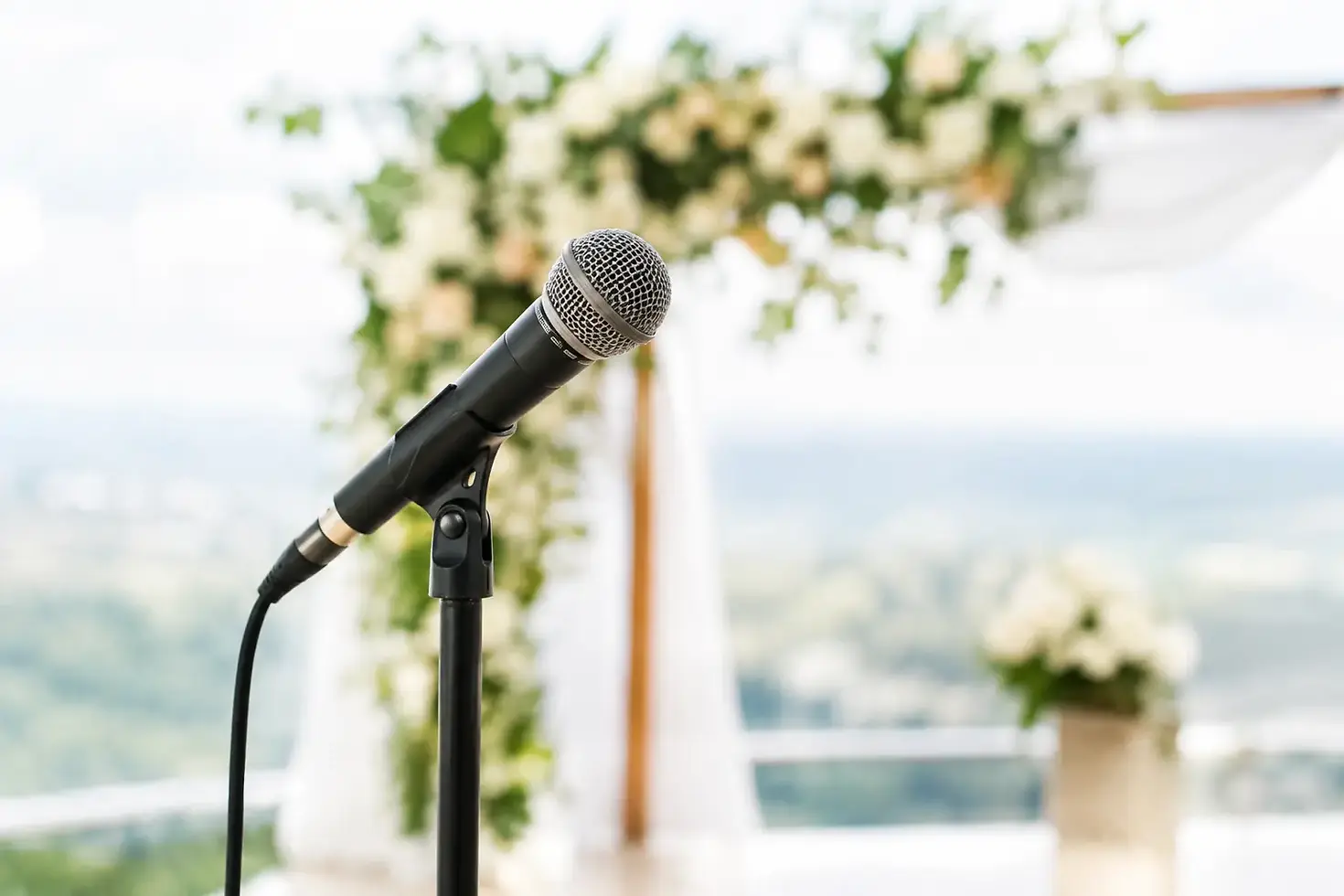
A handheld microphone is the best choice for readings, poems, blessings, and guests who may not be comfortable wearing a clip-on microphone. A stand gives the speaker a consistent distance from the mic and keeps both hands available for notes.
Set the microphone at mouth level, not chest level. Ask readers to speak toward the microphone rather than directly into it. They should stay close enough for clear sound, usually two to four inches away, but they do not need to touch the mic with their lips.
Podium microphones
If your ceremony includes several readings or a formal program, a podium microphone can keep transitions organized. It also provides a visual cue: when it is time to speak, speakers know exactly where to go. Podiums are useful at large venues, but they can feel too formal for a relaxed garden, loft, or waterfront ceremony.
Microphones for musicians
Live ceremony music deserves the same planning as spoken vows. A vocalist may need a dedicated mic, while acoustic instruments may require a direct connection or a carefully placed instrument microphone. Do not assume a musician's setup will automatically work through the ceremony speakers. Confirm it during planning so your processional, recessional, and special song selections sound polished from the first note.
How to Use Ceremony Microphones Without Feedback
Feedback is the high-pitched squeal no couple wants during a meaningful moment. It usually happens when a live microphone picks up sound coming from a nearby speaker, creating a loop. Preventing it comes down to placement, volume control, and professional sound checks.
Speakers should sit in front of the microphones, aimed toward the guests rather than the ceremony participants. Never place a speaker directly behind an officiant wearing a live lavalier mic. The closer the mic gets to a speaker, the greater the feedback risk.
Volume should be set for the room, not pushed as high as possible. In a quiet indoor space, clear speech may require far less volume than hosts expect. Outdoors, the production team has to account for wind, nearby traffic, crowd noise, and open space. Sometimes extra speakers are better than one overly loud speaker because sound can be distributed evenly without forcing the system.
A trained technician should test each microphone with the actual sound system and speaker placement. A quick "check, one, two" is not enough. They should speak at a normal ceremony volume, walk through transitions, and listen from the guest area.
Build Microphone Time Into Your Ceremony Timeline
The best equipment cannot fix a rushed handoff. Add microphone planning to your ceremony timeline so nobody is searching for batteries or asking where to stand once guests are seated.
Plan for the audio team to arrive early enough to place speakers, run cables safely, connect wireless receivers, and test every channel. The officiant and couple should be mic'd before the ceremony begins, usually after getting dressed and before final photos near the ceremony area. If the couple prefers privacy, the team can place transmitters discreetly and coordinate with the photographer and planner.
Readers should receive a simple instruction before the processional: wait for the officiant's cue, approach the microphone, adjust the stand only if needed, and speak slowly. This small bit of coaching makes a noticeable difference for guests and for the video recording.
Your team should also know what happens after the recessional. Will the ceremony microphones stay live for announcements? Does the DJ need to welcome guests to cocktail hour? Is a musician performing immediately afterward? Clear answers prevent dead air and keep the celebration moving.
Do Not Forget Audio for Your Wedding Video
Great ceremony audio is not only for the guests in the moment. It is what lets you relive the laughter in your vows, the emotion in a parent's reading, and the applause at the end years later.
A professional video team may record audio from the sound board, use separate wireless recorders, or place backup recorders close to key speakers. Redundancy matters because live events have no retakes. Wireless signals can experience interference, a battery can fail, or a speaker may move unexpectedly.
Ask your entertainment and media teams how they will coordinate. When DJ, production, photography, and cinematography teams work from one shared timeline, they can capture the ceremony without competing for space or creating visual distractions. This is one reason bundled event services can make planning easier: one coordinated team can manage sound, timing, and coverage together.
A Quick Pre-Ceremony Sound Checklist
Use this checklist with your DJ, MC, planner, or production team before guests enter:
Test the officiant's microphone at normal speaking volume.
Confirm the couple's vow coverage and backup recording plan.
Check each reader's microphone and stand height.
Place speakers in front of all live microphones.
Test ceremony music, including processional and recessional cues.
Confirm fresh batteries and available backup microphones.
Review the final ceremony order and all microphone handoffs.
At Perfect Entertainment, coordinated event production means your ceremony audio can be planned alongside your DJ, musicians, photography, and video coverage instead of being handled as one more separate vendor task.
The most meaningful ceremonies do not feel overly produced. They feel effortless because the right people have prepared for the details. Give your guests the gift of hearing every word, then let the microphones fade into the background where they belong.


Comments