
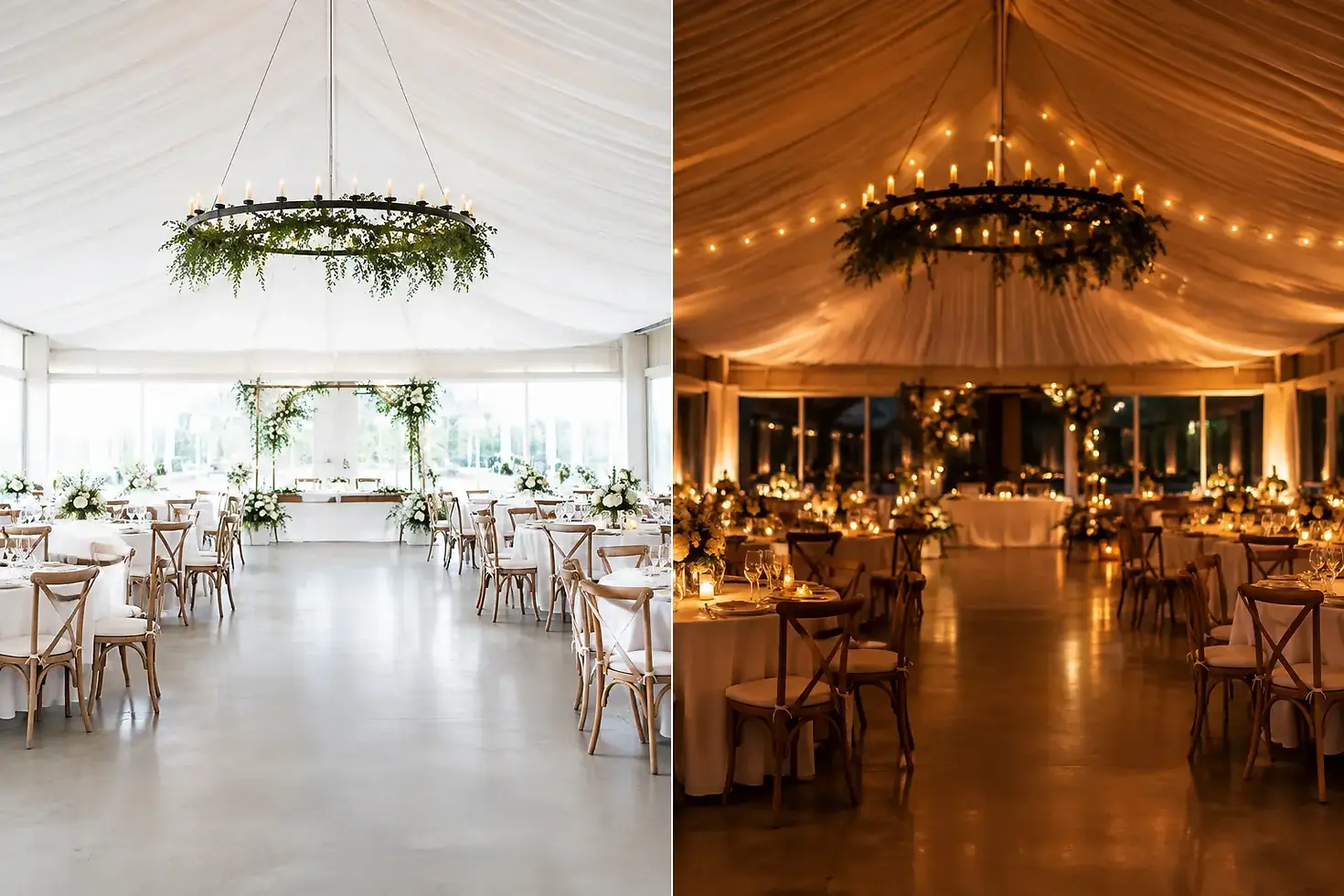
What a Wedding Lighting Transformation Changes
The room may look beautiful when you tour it at noon, then feel completely different once your guests arrive after sunset. That is where a wedding lighting transformation earns its place in the plan. The right lighting does more than make a ballroom look colorful. It directs attention, softens a large space, supports your photos and video, and gives every major moment the energy it deserves.
For couples planning a wedding in Brooklyn, New York City, or anywhere a venue has to serve several purposes in one night, lighting is often the difference between a standard reception and an experience that feels fully designed. The goal is not to put lights everywhere. It is to build a look that fits your venue, your timeline, your entertainment, and the way you want guests to feel.
Why Lighting Changes the Entire Reception
A wedding reception moves through distinct moments. Guests enter and find their tables. They watch introductions, listen to toasts, eat dinner, celebrate the first dance, and eventually fill the dance floor. One static lighting setting cannot serve all of those moments equally well.
Warm, flattering light creates a comfortable dinner atmosphere and lets guests see one another. A focused spotlight makes a first dance feel personal even in a large room. Dynamic color and movement can signal that the formal program is over and the party has started. When these changes are handled with intention, the reception feels like it is progressing naturally instead of simply switching from dinner to dancing.
Lighting also changes how a room reads on camera. Uplighting can add depth to plain walls, highlight architectural details, and make a large ballroom feel more connected to your color palette. Carefully placed lighting helps photographers and videographers capture expressions, décor, and movement without turning the space harsh or overly dark.
The trade-off is balance. Too much saturated color during dinner can affect skin tones in photos. Fast-moving effects during speeches can distract from the speaker. A professional lighting plan knows when to create impact and when to stay quiet in the background.
Start With the Feeling, Not the Fixture
Couples do not need to know the technical names of every lighting fixture to make strong choices. Start with the atmosphere you want. Do you picture a soft, romantic room with candlelight-inspired warmth? A clean, modern celebration with a dramatic color reveal? A high-energy dance party that feels like a nightclub after dinner?
Your answers should guide the design. A classic wedding may call for warm amber uplighting, soft pin spotting on centerpieces, and subtle monogram projection. A modern reception may use crisp white accents with a controlled shift into richer color later in the evening. For a lively crowd, intelligent lighting can add motion and excitement once the DJ opens the dance floor.
The venue matters just as much as your vision. High ceilings, exposed brick, mirrored walls, large windows, and tented spaces all respond differently to light. A lighting design that looks incredible in a blacked-out ballroom may need adjustments in a loft with street-facing windows or a venue with bright overhead fixtures that cannot be fully dimmed.
This is why a walkthrough or detailed venue review is valuable. Your production team should be asking about ceiling height, power access, load-in timing, house lighting controls, and where key moments will happen. Those details prevent surprises on the wedding day and keep the design realistic for the room.
The Elements Behind a Wedding Lighting Transformation
The most effective designs are layered. Each lighting element has a job, and not every wedding needs every option.
Uplighting Sets the Foundation
Uplighting places color around the perimeter of the room, typically against walls, columns, draping, or architectural features. It is one of the quickest ways to make a venue feel customized to your wedding. Soft blush, warm gold, champagne, deep blue, and jewel tones can all work beautifully, depending on the décor and the season.
The best approach is usually restrained. A room washed in one carefully chosen tone often feels more elevated than a room competing with multiple colors before the party even begins. If you want a dramatic reveal, the color can change later as the dance floor opens.
Pin Spotting Makes Décor Stand Out
Centerpieces, cakes, sweetheart tables, and floral installations can disappear in a dim reception space without focused light. Pin spotting gives these details definition, making your investment in flowers and décor visible to guests and on camera.
This is especially useful when your centerpieces are detailed or your cake has texture, metallic accents, or delicate design work. It is a subtle enhancement, but it can make the room feel more polished than adding extra décor alone.
Spotlighting Protects the Big Moments
Your first dance, parent dances, entrances, cake cutting, and speeches deserve visibility. A well-placed spotlight gives these moments a focal point while allowing the rest of the room to stay atmospheric.
Good spotlighting should feel natural. It should not blind you, cast unflattering shadows, or force your photographer to work around a harsh beam. Coordination between the lighting team, DJ or MC, photographer, and videographer is what makes the timing feel effortless.
Dance Floor Lighting Changes the Energy
Once dinner and formalities are complete, the lighting can become more expressive. Intelligent fixtures, dance floor washes, and carefully timed effects add momentum to the music and make guests feel invited into the celebration.
This is not about turning every reception into a concert. It depends on your guest list and your music style. A sophisticated crowd may prefer elegant color changes and subtle movement. A high-energy crowd may love bigger looks during open dancing, a hora, or a packed final set. The best plan leaves room for the DJ and MC to read the room while staying within the visual style you approved.
Build Lighting Into Your Timeline
Lighting works best when it is planned alongside entertainment and media, not added at the last minute as a separate décor decision. Your ceremony, cocktail hour, reception entrances, speeches, dances, and exit all create different lighting needs.
For example, if your ceremony takes place near sunset, you may need a gentle transition as natural light fades. If you are using a photo booth, its placement should avoid clashing with projected effects or heavy dance floor traffic. If a live musician performs during cocktail hour, lighting can help define that area without pulling attention away from guest conversation.
A coordinated production partner can keep these moving pieces aligned. At Perfect Entertainment, lighting can be planned alongside DJ and MC entertainment, photography, cinematography, photo booth experiences, and décor so the room, the schedule, and the guest experience support one another. That approach means fewer separate vendor conversations and clearer accountability on the day itself.
Protect the Guest Experience
A dramatic room should still be comfortable. Avoid designs that leave dining tables too dark for guests to enjoy their meals or read seating information. Keep bright fixtures out of direct sightlines where possible, particularly for grandparents, children, and guests who may be sensitive to flashing effects.
Talk openly about your preferences before the wedding. If you do not want strobing, say so. If you have guests with sensory sensitivities, the production team can use color and movement thoughtfully without relying on intense effects. If you want your photographer to capture clean, true-to-life images during toasts, that needs to be part of the lighting cue plan.
The same consideration applies to your décor colors. White florals can take on the shade of the uplighting around them. Dresses, linens, and skin tones may look different under blue, purple, or red light. There is nothing wrong with bold color, but it should appear at the right time rather than dominate every image from the evening.
Make the Investment Where Guests Will Feel It
If the budget requires choices, prioritize the areas that will have the greatest impact: the room perimeter, head table or sweetheart table, dance floor, and key moments such as entrances and first dances. These are the places guests gather, look, and photograph most often.
A smaller lighting package can still look intentional when it is designed around those focal points. On the other hand, adding fixtures without a plan can create clutter and cost without improving the experience. Ask for a clear explanation of what each element will change in the room and when it will be used.
Your wedding should not feel like a collection of separate services operating side by side. When the lighting, music, media, and décor are coordinated from the beginning, the transformation feels natural - and you get to spend the night enjoying the room you imagined instead of managing the details behind it.

Comments